
How Pitch Conditions Really Influence La Liga Matches
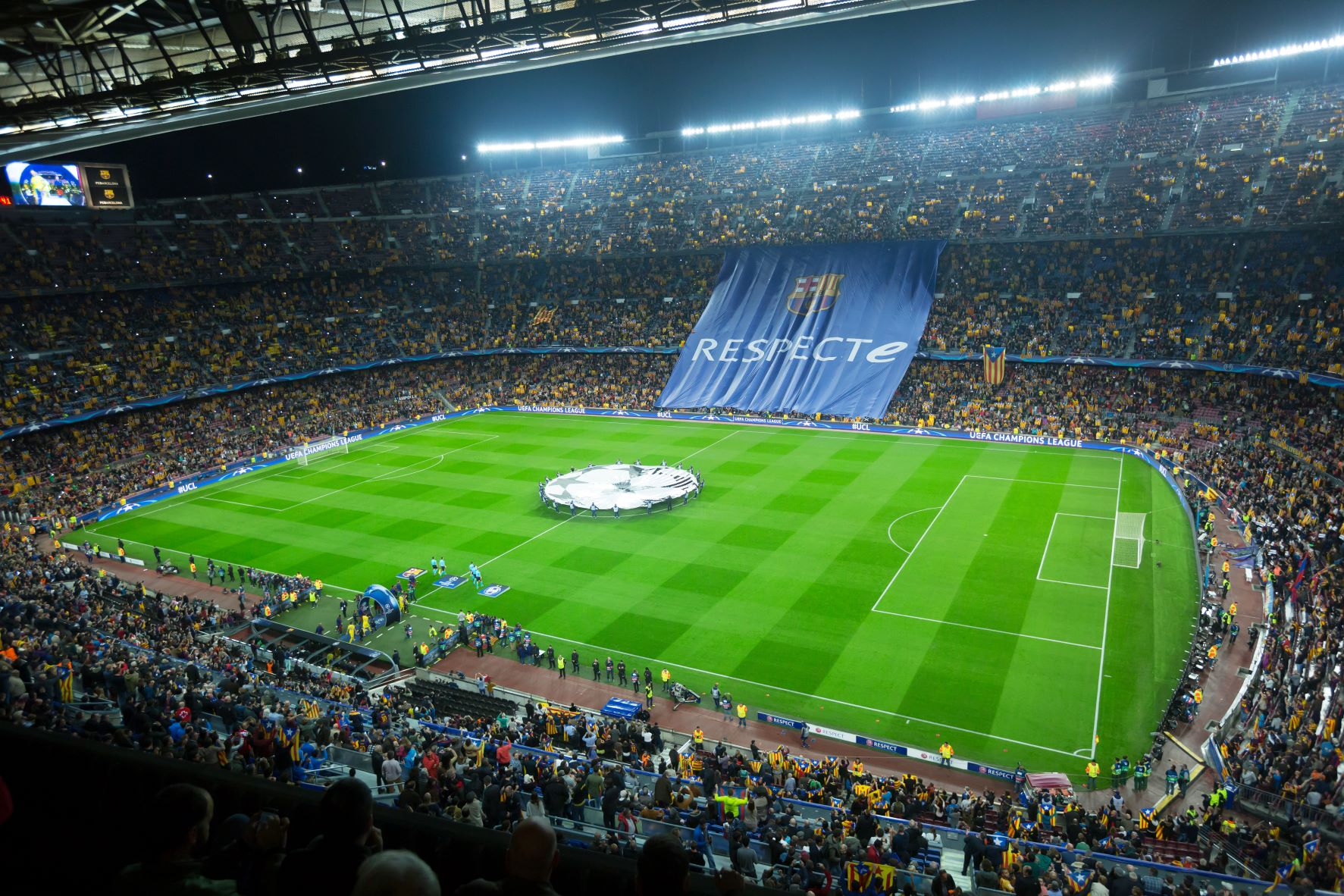
Analysing the Impact of Pitch Conditions in La Liga
In La Liga, pitch conditions rarely become unmanageable mud baths or frozen fields, because the league has built a regulatory and technological framework that keeps surfaces uniformly stable across very different climates. That does not mean the pitch is irrelevant; instead, its influence comes through more subtle pathways—ball speed, footing, fatigue and injury risk—shaped by local weather and each club’s maintenance choices within the rules.
How La Liga Regulates Pitch Quality and Why That Matters
La Liga has codified pitch quality into its Television Broadcasting Regulations and a dedicated Pitch Quality Programme, requiring all clubs to maintain surfaces that are safe, uniform and visually consistent. The rules specify that the grass height must be kept between 20 and 30 millimetres, that coverage must be complete, colour uniform, and that mowing and line marking follow defined standards; partial reseeding or visible defects require an action plan and deadline for correction.
These regulations mean that, in theory, the ball should roll smoothly and predictably in every stadium, regardless of weather swings between the rainy north and hot south. For analysts, this reduces the number of extreme outlier matches where poor turf becomes the main story, but it also raises the baseline importance of small deviations: a slightly drier, faster field or a slightly softer, slower surface can still alter tempo and tactical choices within a tightly controlled quality band.
How Climate Differences Across Spain Shape Pitch Behaviour
Spain’s geography creates very different maintenance challenges even under common standards. In the damp north, like Bilbao or Pamplona, persistent rain and limited sunlight force clubs to invest heavily in drainage systems and artificial lighting to keep turf healthy and firm. At San Mamés, for example, Athletic Club use hybrid grass—natural turf reinforced with synthetic fibres—to ensure stability in shaded, semi-enclosed conditions and reduce injury risk under varying loads.
In the hot south, such as Villarreal and Granada, the priority becomes protecting grass from intense summer sun and heat. Villarreal’s facilities director notes the club has adopted new grass varieties and protection systems, while Granada uses fertigation (injecting nutrients into irrigation) and a hybrid of ryegrass and bluegrass to withstand extreme temperatures, combined with careful mowing and watering intervals to avoid stressing the turf. As a result, the same regulatory requirements yield subtly different playing characteristics depending on whether the pitch is fighting rain and shade or heat and drought.
Mechanisms: How Pitch Conditions Affect Match Rhythm and Style
Even without obvious damage, small shifts in pitch hardness, moisture and grass length change how the ball and players move. A slightly drier, harder surface tends to speed up ball roll, favouring quick passing and first-time combinations, but can also increase the mechanical load on joints and muscles as studs bite more aggressively into firmer ground. A softer, wetter pitch slows the ball, increases the energy cost of running, and makes rapid changes of direction more taxing, favouring compact defensive structures and direct play over intricate build-up.
Research on natural turf hardness suggests that surface characteristics influence both technical execution and physical output, although the evidence linking hardness directly to higher injury incidence remains mixed and methodologically constrained. A PhD thesis on pitch hardness showed that technical and physical performance profiles change with relative surface hardness, while a broader review found that existing epidemiological studies could not yet confirm hardness as a definitive extrinsic injury risk factor, highlighting the need for better objective measurement. In practice, La Liga’s pursuit of “carpet-like” uniformity is partly an attempt to stabilise this variable so that players and coaches can trust the ground they are working on.
Conditional Scenarios: When Weather and Pitch Really Start to Matter
Pitch influence spikes when weather pushes maintenance systems close to their limits. Sudden storms, for instance, can transform a usually dry surface into a slick, fast track. Reports from Mestalla in Valencia describe how rare but intense downpours create a “quick and slick” surface that invites daring passing and produces unpredictable deflections, making games more open and volatile. Conversely, searing heat slows matches as pitches dry and players conserve energy, turning games into more tactical, slower-paced affairs even on visually perfect grass.
Extreme weather can still force postponements despite modern drainage and hybrid systems. Villarreal’s clash at Levante was suspended following a severe weather alert, illustrating that, when local conditions exceed infrastructure capacity, safety concerns override any attempt to play through. These cases are rare in La Liga, but they highlight that pitch robustness is not infinite; beyond a certain threshold, the surface becomes a direct determinant of whether the game can proceed at all.
UFABET, Pre-Match Analysis, and Reading Pitch Effects Without Overreacting
When assessing La Liga fixtures via a betting environment or football betting website such as UFABET168, pitch condition is an easy narrative hook (“slow pitch favours the underdog,” “fast pitch helps the favourite”), yet the league’s regulations mean that only meaningful deviations deserve attention. In a pre-match analysis perspective, the more rational approach is to integrate pitch as one variable alongside weather and style: a user notes, for instance, that a possession-heavy side is visiting a northern stadium known for heavy rain and cooler temperatures, where hybrid turf and strong drainage keep the surface playable but sometimes slower. If forecasts point to persistent rain or humid conditions that may dampen ball speed and fatigue pressers faster, that nuance can modestly downgrade expectations for high-tempo passing or very high totals, without overturning everything current form suggests. The key is to use evidence about local climate and infrastructure to calibrate, not dominate, pre-match expectations.
List: Practical Indicators That Pitch Conditions Could Influence a La Liga Match
Because most La Liga pitches are maintained near a high standard, analysts need a structured checklist to decide when the surface might meaningfully affect play or risk. Each indicator links observable information to a plausible mechanism.
- Local climate and real-time weather: identify fixtures in regions with heavy rain (north) or high heat (south and east) and cross-check forecasts; prolonged rain increases reliance on drainage and can slow the surface, while extreme heat can dry and harden pitches, affecting ball speed and player fatigue.
- Stadium and turf technology: note which grounds use hybrid grass, artificial lighting and advanced drainage (e.g., San Mamés, Villarreal, Granada); these systems reduce variability in firmness and traction, making surfaces more predictable even under challenging conditions.
- Recent maintenance reports and non-compliance: La Liga’s Pitch Quality Coordinators flag non-uniform coverage or disease; when a club is working under an action plan to restore quality, short-term irregularities in bounce or traction may appear despite compliance efforts.
- Injury and performance patterns tied to conditions: look for clusters of muscle or joint injuries during periods of unusual heat or heavy scheduling on certain surfaces; while evidence is not definitive, spikes may indicate a temporary mismatch between pitch hardness and player load that warrants caution.
Applying these indicators together means pitch is considered seriously only when there is concrete reason to expect its behaviour to deviate from La Liga’s typical “carpet” standard.
Where Pitch-Condition Narratives in La Liga Often Mislead
Pitch-based explanations become weak when they ignore how far La Liga has gone to standardise surfaces. The league created a Pitch Quality Coordinator role in 2018, introduced uniform criteria for grass height, coverage and colour, and demands corrective action when pitches deviate from agreed standards. As a result, many complaints about “bad pitches” in top-flight Spanish games are more about tactical frustration than objectively poor turf.
Another failure point is conflating weather with pitch mechanics. Studies on artificial vs natural surfaces indicate that injury incidence and type depend on more than the label of the surface, with some work suggesting lower rates of certain injuries on artificial turf despite stereotypes. Similarly, La Liga heat-risk analysis found that no matches were played at “extreme” heat levels and only a small percentage at high risk, thanks to scheduling and infrastructure. Without distinguishing between visually dramatic weather and actual measured changes in surface hardness, traction and temperature, analysis can overstate the pitch’s role while underweighting tactical, technical and conditioning factors.
Summary
In modern La Liga, pitch conditions exert influence in more subtle ways than in older eras, because league regulations and club investment have driven surfaces toward a uniform, hybrid-rich, “carpet” standard despite Spain’s extreme regional climate variation. Grass height, coverage, drainage and even colour are monitored, while technologies from artificial lighting to hybrid turf protect stability in places as different as Bilbao, Villarreal and Granada.
Within that controlled framework, weather and maintenance still shape match flow: slick or soft pitches alter ball speed, traction and fatigue patterns; heat and hardness interact with injury risk in ways researchers are only beginning to quantify. By combining climate, stadium technology, maintenance status and injury/performance patterns rather than leaning on generic “bad pitch” narratives, observers can treat the surface as one concrete, measurable factor in La Liga analysis instead of a catch-all excuse whenever a game does not follow expectations.